
A Mountainous Challenge: Conquering the Snowdonia Marathon Eryri

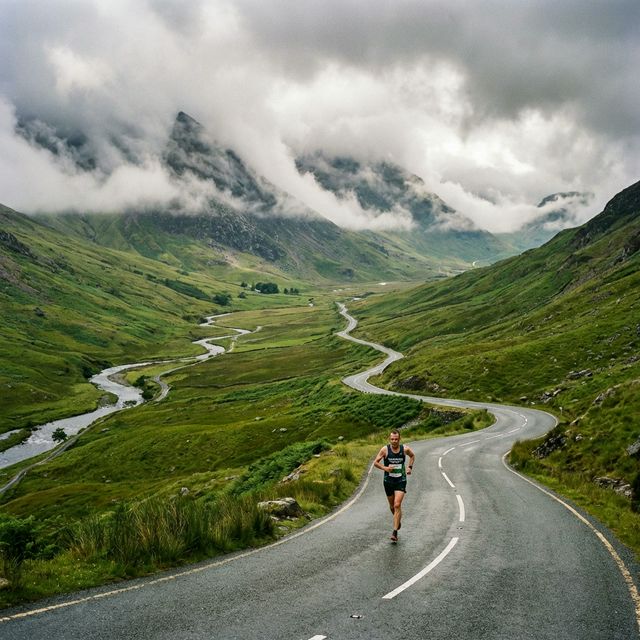
Last month, I had the privilege of once again taking on the iconic Snowdonia Marathon Eryri. This challenging race, renowned for its breathtaking mountain vistas and demanding terrain, is considered one of the most beautiful and challenging marathons in the UK.
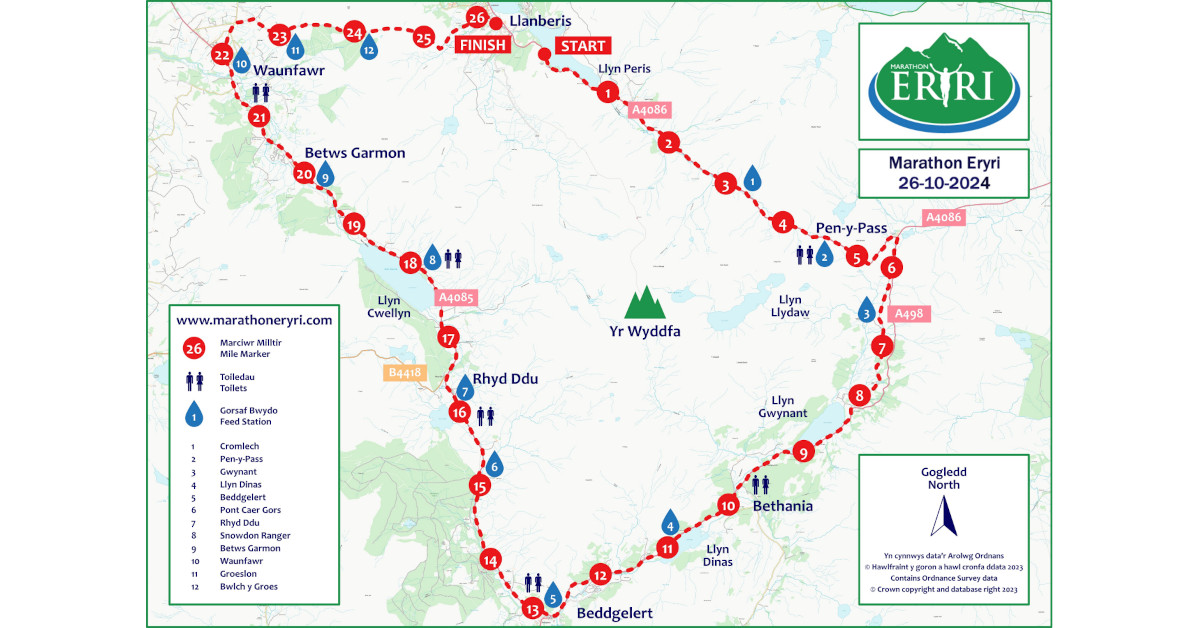
The annual event, held around the foothills of Yr Wyddfa (Snowdon), starts and finishes on opposite sides of the picturesque village of Llanberis. The course takes runners on a clockwise circular route, beginning with a gruelling climb up to Pen-y-Pass, the gateway to the majestic summit of Snowdon itself.
Familiar Foe, Renewed Passion
Having run the Snowdonia Marathon Eryri multiple times, I’ve experienced both triumphs and setbacks. My fastest time, achieved 15 years ago, seemed like a distant memory as I have gradually slowed and slowed in subsequent years. However, last year marked a turning point, as I managed to reverse this trend and finished in a respectable 4 hours and 5 minutes.
Determined to push myself further, and with ten months to prepare, I embarked on a focused training plan, aiming to make this year the year that I finally broke my previous personal record. The thought that my advancing years could mean that this might be my last attempt was another strong driver to make this year count.
With Marathon Eryri as my sole focus, I entered the race as my primary goal in TrainAsONE, and followed a slow build-up of easy runs, where speed work was conspicuous by its absence.
Trusting the Training
For a little bit of fun and to support my local running club, I additionally ran their 5k and 10 mile race. Given my consistent training, I was quietly confident in my performance prior to these races. However, when the time came, I did not yield the desired results – significantly short on last year’s times. However, I did not get despondent.
““I trusted the process and the wisdom of TrainAsONE, recognising that the training plan was crafted for the marathon in many weeks time.”
”
As the weeks progressed, my weekly mileage increased, but speed work remained absent from my training schedule. Whilst contrary to traditional plans, I kept reassuring myself that ‘TrainAsONE knows best’. And in many ways I was pleased, as the duration of my easy runs was already taxing enough and the thought of adding speed-work on top, daunting.
As I approached the final weeks before the taper, my longest run peaked at 17 miles. While this fell short of the traditional 20 to 22 mile long runs, especially for a hilly marathon, I trusted the wisdom of TrainAsONE and happily resisted any urge to increase the distance.
TrainAsONE’s three-week taper plan began. The drop in running volume was a welcome relief. However, during the second week I experienced a sense of sluggishness and fatigue, leading me to question if I was coming down with an illness. This did not seem to materialise, and I put it down to ‘taper blues’.
The day before the race, I embarked on a six-hour drive to Wales, arriving at my hotel in plenty of time for dinner.
Despite an unusually restless night’s sleep, I woke up early and headed to the event centre to secure a parking space – easing any pre-race anxiety as the car parks can fill up quickly. I fuelled up with a bowl of porridge and kept warm in my car with a sleeping bag until it was time to make my way to the start line.
Race Day: A Test of Will and Endurance
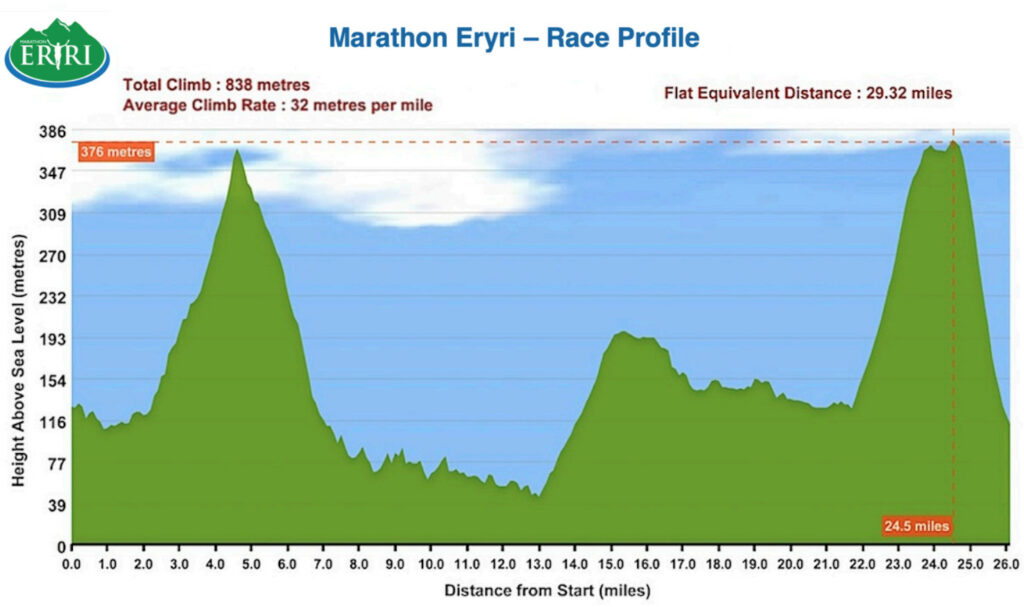
I positioned myself in the starting corral not too far behind the 3:30 pacers. The weather conditions were mild, with temperatures around 12°C and overcast skies. My race strategy was clear: maintain a comfortable pace of 4:45 per mile until the 22-mile mark, the base of the final and most challenging hill. From there, I would push myself to the limit on the ascent and descent, giving it my all to reach the finish line as quickly as possible.
The first four miles were gently undulating, and I consciously resisted the urge to push the pace. At the 4km mark, I reached the foot of the first major climb, a 250-meter ascent to Pen-y-Pass. With determination, I focused on the task at hand, putting my head down and powering up the hill. I completed the first 5km in 24:45, comfortably on pace and even slightly ahead of my previous best split time. As I neared the summit, my calves began to tire, but I refused to succumb to the temptation of walking.
Having conquered the summit, I rewarded myself with a quick drink and embarked on the exhilarating descent to Nant Cynnyd. As a downhill runner, I relished the opportunity to pick up the pace, overtaking several runners who had passed me on the uphill climb. I even overtook the 3:30 pacer group – “don’t worry”, I thought “you’ll soon catch me up”. My fastest downhill pace reached a speedy 3:39 minutes per kilometre.
The following 10 kilometres were characterized by gentle undulations, and I began to count down the miles. As I approached Beddgelert, the atmosphere was electric, with cheering crowds lining the streets and festive music filling the air. The energy of the crowd gave me a much-needed boost.
As I left Beddgelert, my watch pinged 21 kilometres, I was halfway and four minutes ahead of my personal best. I felt surprisingly comfortable, a sensation I hadn’t experienced before in this race.
However, the reality of the race soon set in as I left the town and faced another uphill challenge. With the ‘4 minutes up’ at the back of my mind, I knew that this was the day to push my limits and not let my legs dictate the pace. I focused on one kilometre at a time, determined to maintain my momentum up the 150 metre climb to Ffridd Uchar.
On previous attempts at this race, I had resorted to walking the steepest sections of this hill. However, today, I was determined to push through. The hill seemed to stretch on forever, but I persevered, eventually reaching the summit.
I drew comfort from the knowledge that the 3:30 pacer was still behind me, though I had no idea how far. With ten kilometres of rolling terrain to navigate before the final, decisive climb, I focused on the total distance remaining: ten miles. ‘Just a 10-miler left’ – I tried to convince myself this was easily doable. As the miles ticked by, I found myself counting down:
- Nine miles to go,
- Eight miles to go…
- I was starting to feel tired, but only 7 miles to go!
At this point, the 3:30 pacer group overtook me. With a wry smile, “Took your time” I thought to myself.
As I reached the 21-mile mark, my legs began to feel the cumulative effects of the race – a good deal further than would be normal for me on this race. With just one mile to go before the final, daunting hill, I urged myself on, determined to keep my legs moving and maintain my pace. While a few runners overtook me, I continued to push forward, overtaking others in return.
I knew that my previous personal best time to the foot of the final hill was 2 hours and 59 minutes. Resisting the urge to check my watch, I focused solely on reaching the hill as quickly as possible. When I arrived, my watch displayed 2 hours and 53 minutes, a significant 6 minute improvement over my previous best.
I refused to walk. With each step, I willed myself up the hill, one foot in front of the other. The hill seemed to stretch on endlessly, with false summits teasing me along the way. But eventually, I reached the top. I glanced at my watch. I was now 5 minutes ahead of by previous best.
With just 2 kilometres remaining, I faced a daunting challenge: the very steep, slippery and muddy, section down to Llanberis. On my previous personal best run, I had somehow managed to cover this section in 4:07 minutes per kilometre, a feat I still can’t fully comprehend. Today, I knew I had to give it my all to maintain my lead. With sore feet and stiffening legs, I gritted my teeth and let gravity carry me down the treacherous slope.
A Hard-Earned Victory
With one kilometre to go, I felt a surge of energy, but I knew it wasn’t anywhere near my top speed. As I reached the bottom of the hill, my sore feet and aching toes reminded me of the toll the race had taken.
With 400 meters to the finish line, I glanced at my watch: 3:39. That elusive personal best was within reach.
I sprinted towards the finish line, covering the final 400 meters with a pretty fast top speed of 2:45 minutes per kilometre. The crowd’s cheers and the upbeat music fuelled my final push. As I crossed the finish line, I almost collapsed, gasping for breath. Once I regained my composure, I checked my watch: 3:41:03. A personal best! And, as it turned out, my chip time confirmed that I had indeed broken the 3:41 barrier, officially finishing in 3:40:59.
“Job done. Time to get back to the hotel to recover…”
Reflections
Reflecting on the race a month later, I’m still amazed by my performance. Improving my time by 9% from the previous year, a year I thought I was fit and strong, is a testament to the power of training specificity and personalisation.
The key takeaway is that a great marathon time can be achieved without the traditional 20/22 mile long runs and speed work should not be mandatory.
The question now is, could I push my limits even further and break the 3:40 barrier?
Train Smarter, Not Harder
Experience the power of AI-driven personalization. Join Sean and thousands of others who have achieved their best with TrainAsONE.